
Open the Cherokee County Current Owner Record Card
The Spatialest assessment card calls the key field "Owner Name," though a results view may say "Owners." Read it with the parcel keys and date context, never alone.
| Owner Name / Owners | The party or parties carried on the assessment record |
|---|---|
| Parcel # and Account # | The keys that distinguish this land from a same-address or same-name result |
| Mailing Address | Where assessment and tax notices are sent, not proof of occupancy |
| Property Address | The situs assigned to the parcel; vacant land may lack one |
| Legal Description | Subdivision, lot, acreage, land-lot, or other land identity clues |
| Sales and Deed Reference | Date, deed type, book/page, price, and qualification fields where populated |
The card also shows Neighborhood, Land Size, Tax District, Zoning, and building or value sections. Those details confirm the result is the intended parcel. They do not turn an assessment card into a title opinion.
Date the Cherokee County Current Owner Evidence
A data timestamp appears on the live portal. It marks when the dataset was assembled. It does not mark when a named deed was filed or when one parcel last changed hands. Record the access date, the tax year, and the owner field together. The assessor advises users to verify the data. That is sound practice. Transfers, splits, combines, and corrections move through county systems at different speeds. A screenshot lacking the parcel number and source date is weak evidence.
Note: Treat a portal timestamp as dataset context. Never treat it as the effective date of a particular conveyance.
View the Cherokee County Owner of Record Portal
The county's officially linked property search offers Account, Address, Parcel, and Owner modes for reaching the current owner card.
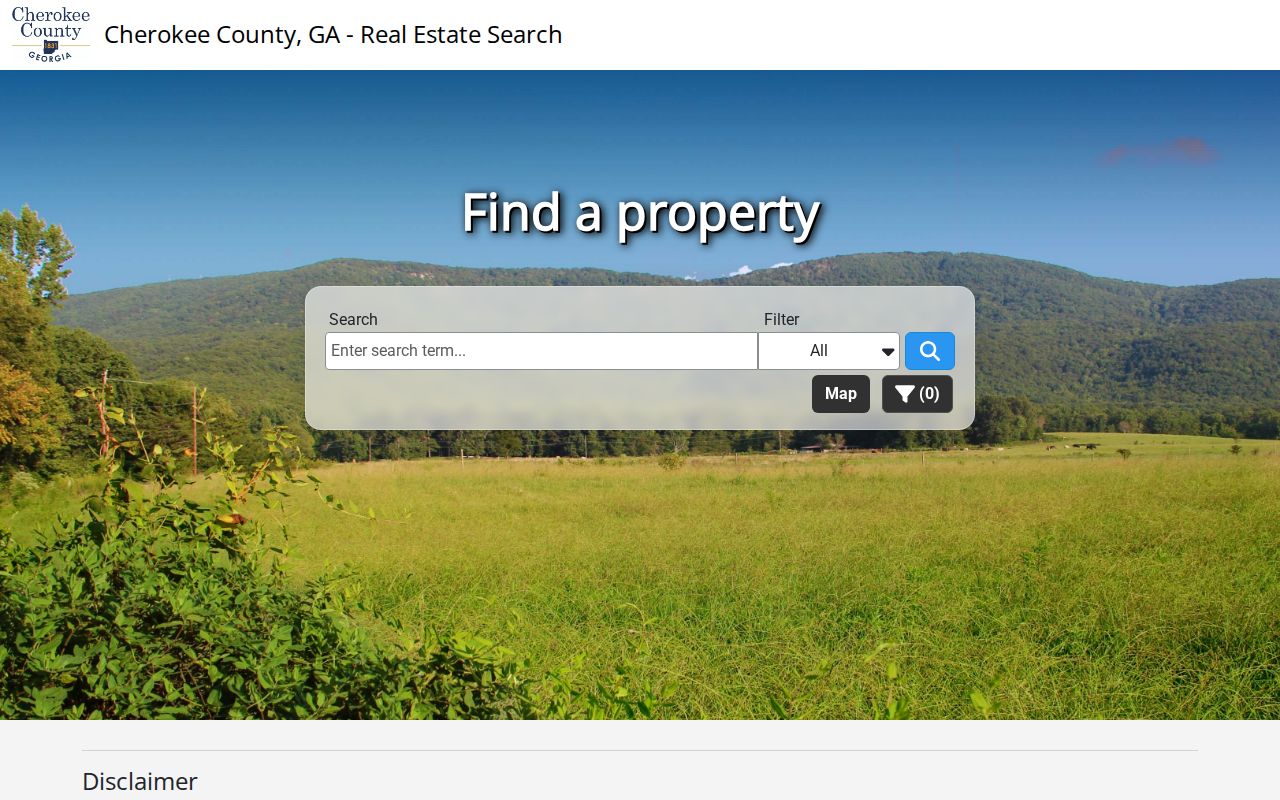
The portal only begins the present-owner check. A displayed name gains force once the parcel details and the newest recorded deed agree.
Account for Cherokee County's January 1 Tax Roll
The Tax Commissioner states that tax records reflect the owner of record as of January 1. A buyer who closes later may see the prior party remain on that year's tax record even after the new deed is recorded. That is not a stated fixed lag in days; no official source supplied one.
A post-January 1 buyer may file a property-tax return between January 1 and April 1 of the following year. A PT-61 can serve as that return when there is no subdivision, improvement, or change. This annual rule explains why current owner checks must distinguish the tax-year owner from the latest grantee.
Fresh transfer. The roll can lag a recent sale. Check the newest recorded deed before relying on a current owner name.
Check the Latest Cherokee County Sales Row
Spatialest sales data can list Book, Page, and Sale Date. It can also show Deed Type, Qualified status, Sale Price, and Vacant or Improved status. The newest row bridges the owner card directly to the Clerk's recorded instrument. A sale row alone is not enough. Compare its book and page with the deed image. Then match the legal description to the parcel number. The qualified flag reflects assessment methodology, not a ruling on title.
Separate Cherokee Owner Mail From the Property Situs
Notices go to the mailing address. The property address is the situs. The two may match, but a different mailing address can point to an out-of-county owner, an entity, a trustee, an agent, a lender, or another notice recipient. It never establishes who occupies the land. When addresses conflict, compare the legal description, tax district, neighborhood, land size, and GIS polygon. County fields include Map, SubMap, Block, Parcel, ParcelSuffix, Lot, Tract, TIN, and TINNoSpace. Preserve the full key, leading zeros and suffixes included.
Confirm the Current Cherokee County Owner
A present-owner check ends with a recorded conveyance, not a name-only search. The Clerk's Landmark system covers 1989 to current, according to the office.
- Copy the exact owner label, parcel number, legal description, and latest book/page from Spatialest.
- Search Landmark for the corresponding instrument and open the newest recorded deed image.
- Compare grantee, filing date, deed type, legal description, and cross-references with the parcel card.
- Record any mismatch or missing image rather than forcing the two sources to agree.
- Owner of record
- The party shown by the record consulted, with its date and purpose.
- Assessment roll
- The tax administration record maintained by the assessor.
- Recording lag
- The interval while a newer event has not appeared in every county system.
Read an Entity as the Cherokee County Current Owner
When an LLC appears, search that exact name at the Georgia Corporations Division. Filing-history details, plus status and registered-agent information, can corroborate the entity named in a deed or permit. They do not reveal a beneficial owner or prove the agent occupies the parcel. Read a trust or estate as filed. Preserve any trustee, executor, or administrator language. If an estate transfer matters, locate the probate case. Obtain the order or petition. Then confirm the recorded deed or affidavit.
Use Every Cherokee Current Owner Access Channel
If Spatialest fails, try the county-linked qPublic or Community Spatialest route. Then try the Assessor counter or phone support. For deed proof, use Landmark, GSCCCA, or the Clerk's public terminal and counter. You can also use a mail copy request or eCertified service. The Clerk will not research recorded documents by telephone. A narrow request for an existing administrative record can go through Cherokee NextRequest. Georgia law does not require staff to build a new ownership analysis. Save the index citation and note whether the copy was regular, certified, or eCertified.
Use Cherokee County Current Owner Data With Care
A tax mailing address can support a lawful property inquiry, such as purchase due diligence, an easement question, or an estate matter. Keep the contact tied to the land. Never infer residence, family ties, or occupancy from an owner record. Safe at Home, VoteSafe, sealed cases, and statutory exemptions can all shield sensitive address data.
Lawful use. Public owner information supports property research. It must never be used to stalk, harass, threaten, or target a person.