
Find Who Owns Cherokee County Property in Four Moves
Find the parcel first. Use the Cherokee County Spatialest search for discovery. The Clerk's land records then confirm who holds title, so a postal label or a loose name match never masquerades as proof of ownership.
- Search the street address and select the parcel whose situs and map location match.
- Copy the Parcel #, Account #, “Owner Name,” legal description, and deed book/page from the card.
- Open the newest conveyance in Landmark and compare its grantee, land description, and recording date.
- If the address misses, use the TIN, PIN, map, lot, tract, or subdivision clues in county GIS.
Tax mail goes where the owner wants it. That address is not always the property itself. Keep the distinction in mind, and for a close read of the current roll, turn to the current Cherokee County owner guide.
Where Cherokee County Property Ownership Appears
One screen never answers everything. Cherokee County systems capture ownership at different moments and roles, so keep each source date and exact field label with the result.
| Record source | Ownership clue | Currency and limit |
|---|---|---|
| Spatialest assessment card | “Owner Name” or “Owners,” parcel and mailing fields | Current assessment data on an annual tax cycle |
| Landmark deed index | Latest recorded grantee and deed image | 1989 to current; recording is stronger than the roll |
| TaxParcels GIS | Parcel identity and assessor, deed, and plat links | Geometry guides research but does not prove title |
| Probate or court file | Estate or title-case context | Use only when a specific transfer calls for it |
The assessor names the party on the tax roll. The deed index records each conveyance, and GIS confirms that both describe the same land.
Read Cherokee County's Exact Owner Labels
The live parcel card shows an “Owner Name” field. Result cards may say “Owners.” Copy names exactly. Keep initials, suffixes, every party, and any entity form. The same card also carries the parcel number, account number, legal description, and tax district. It lists zoning, land size, neighborhood, sale rows, and building and value details too.
The portal's data timestamp is not the deed date. It does not erase the January 1 tax-roll basis. A buyer after January 1 may not be the party used for that year's billing. Check the latest sales row and the recorded deed next.
- Owner of record
- The party carried by the official record being read.
- Grantee
- The party receiving an interest in a conveyance.
- Situs address
- The location assigned to the land, which can differ from mail delivery.
- Title
- The legal rights in land; a portal name alone is not a title opinion.
Note: Keep the tax year and portal date with any owner label you copy, so a later refresh does not strip away that context.
See the Cherokee County Property Owner Starting Point
The county-linked Spatialest assessor portal answers the first question.
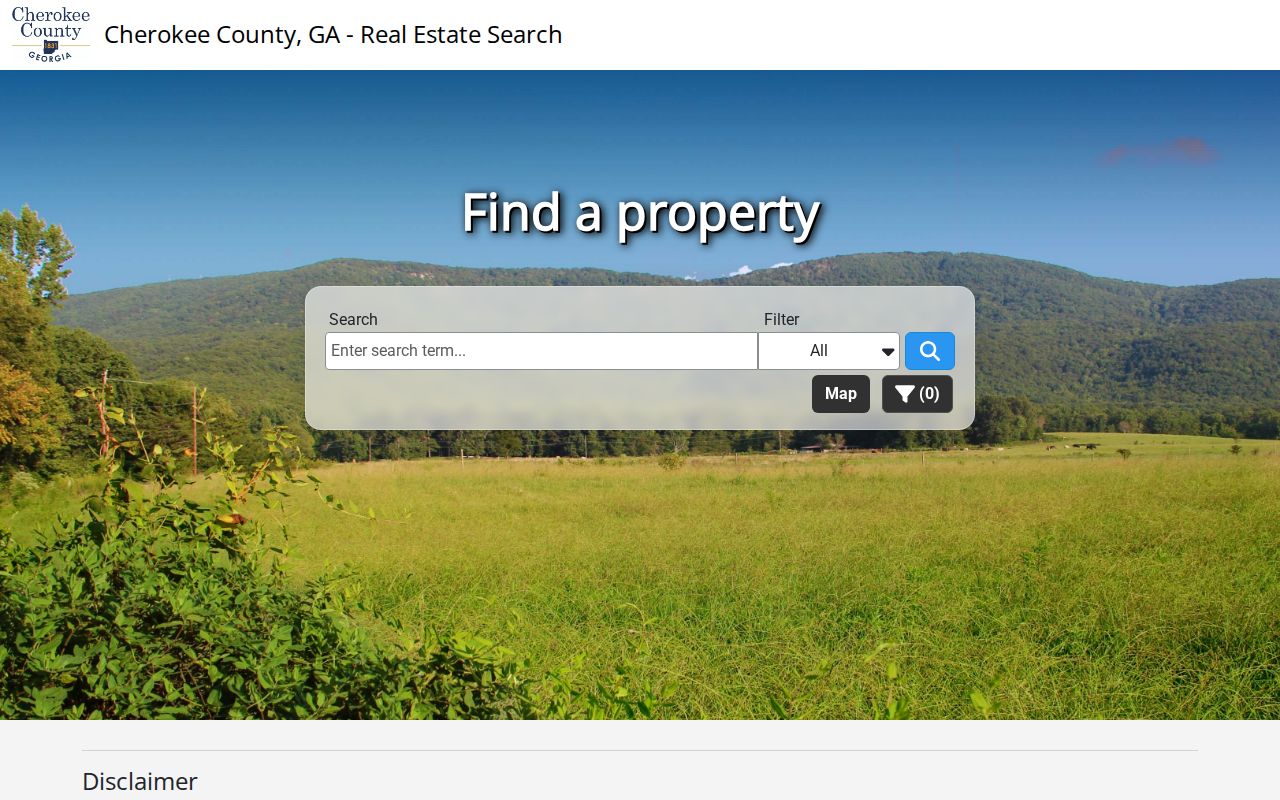
Each search mode leads to a parcel card. The owner answer still must be tied to its parcel number and the newest recorded conveyance.
Check Cherokee County's January 1 Ownership Cutoff
Tax records reflect the owner of record as of January 1. A later purchase can yield two accurate but different-looking facts: the tax record may retain the January party while a newer deed names the buyer. The Tax Commissioner says a buyer after that date may file a return from January 1 through April 1 of the next year; in some cases the PT-61 serves as the return.
Recent-sale check. An assessor name is not a title search. When timing matters, the newest recorded deed is the better ownership checkpoint.
Identify Cherokee LLC or Trust Ownership Without Guessing
An LLC owner field needs a name search. Run the exact legal name through the Georgia Corporations Division. A filing may show status, a registered agent, officers, and filing history, facts that can corroborate the entity behind a deed, lien, plat, or permit.
A registered agent is not the beneficial owner. Nor is he automatically the occupant or decision-maker. Copy a trust name exactly, including trustee capacity. For an estate, use the Cherokee Probate portal to locate the matter and the document explaining a transfer, then return to the recorded instrument.
Use Cherokee Parcel Clues When Addresses Conflict
The mailing address shows where notices go. It may belong to an owner, agent, lender, or distant contact, and it never proves occupancy. The property address, postal city, and incorporated jurisdiction can differ, and Cherokee GIS supplies TIN, PIN, map, submap, block, parcel suffix, lot, and tract clues to pin down the land behind an uncertain address.
Vacant land may carry no address. Match the legal description, land lot, district, subdivision, unit, lot, block, acreage, and prior book/page. Keep leading zeros and suffixes intact. A shortened parcel number is an invented one.
Trace the Cherokee County Property Owner to the Latest Deed
The Clerk's Deeds and Records division links Landmark for records from 1989 forward. Search the assessor name first. Compare the latest deed next. Match its grantee, book/page, filing date, and legal description against the parcel. GSCCCA offers another route. Search there by party, county, book/page, date, instrument type, subdivision, unit, block, or lot.
Other channels exist. The public counter and terminal, mailed requests, online regular copies, and eCertified documents all serve. Staff explain process and fees by phone but not deed research. An image may be missing. Carry the exact names, instrument type, date range, and parcel description to the counter or a mail request.
Watch New Cherokee County Ownership Filings
The free GSCCCA Filing Activity Notification System sends alerts when a filing is indexed for a registered property. That helps after a purchase. It helps during estate work too, or whenever deed fraud is a concern.
An alert never decides validity. It does not replace a certified deed. Treat each one as a prompt to inspect the instrument, then contact the Clerk or counsel when the filing is unfamiliar.
Know What Cherokee County Ownership Results Cannot Prove
An ownership result has firm limits. It cannot show who actually lives at an address. It cannot reveal whether an agent truly controls an entity. Nor can it confirm whether a lien, easement, or unrecorded claim touches the title. Names diverge for ordinary reasons. The permit applicant, the utility customer, the taxpayer, and the deed grantee can each be a different party.
When an indexed record will not surface, other routes exist in Cherokee County. Try the Clerk terminal or counter. Try its mail route. You can also use Cherokee NextRequest for a narrow administrative record. Keep in mind that the Georgia Open Records Act never obligates the county to build an ownership report for you.
Use Cherokee County Property Owner Data Lawfully
Cherokee County property records earn their keep through legitimate uses. Buyers run purchase diligence, neighbors settle boundary questions, estates get sorted, and fraud checks catch forged deeds. Fraud checks catch forged deeds. None of that licenses stalking, harassment, threats, or the spread of protected addresses. Georgia Safe at Home and VoteSafe can shield qualifying addresses. Separate exemptions may force redaction of owner of record details.
Take only what the question needs. That usually means parcel keys, filed names, the legal description, and the relevant instrument. Note: Cite the source and access date. Send anyone relying on the result to the official custodian.